Ways to Connect: When Connection Looks Different
I began creating my monthly Ways to Connect pages as part of my role on Family Council, but the idea came from something much more personal. I was looking for new ways to engage with my mom as her dementia progressed. As communication became more difficult, I sometimes found myself sitting with her and not knowing what to say or what we could do together to make our visits feel meaningful.
That experience made me think about how many other families must feel the same way. Visiting someone you love can become surprisingly difficult when conversation, memory or physical abilities change. You want to connect, but the things you used to do together may no longer work in the same way.
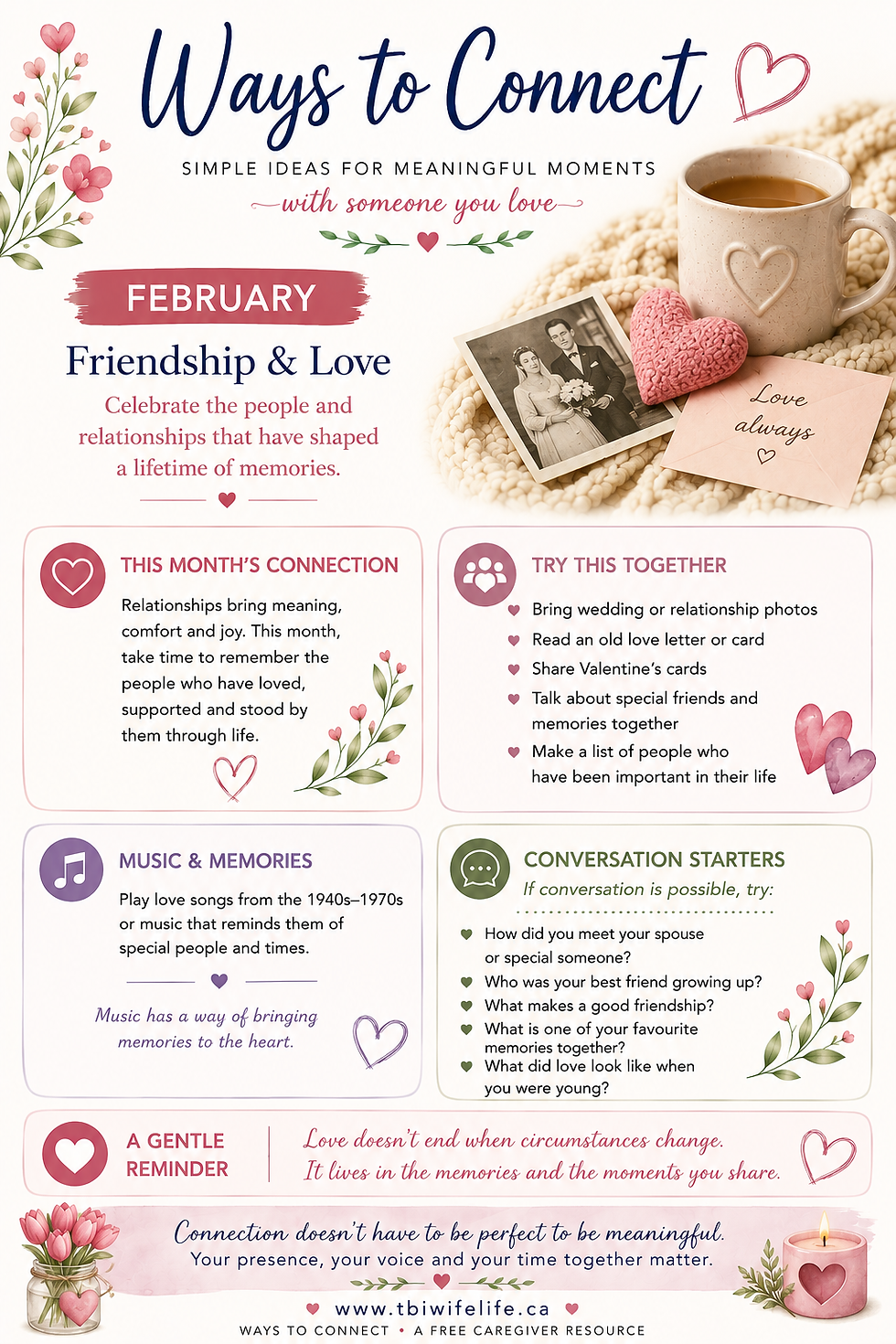
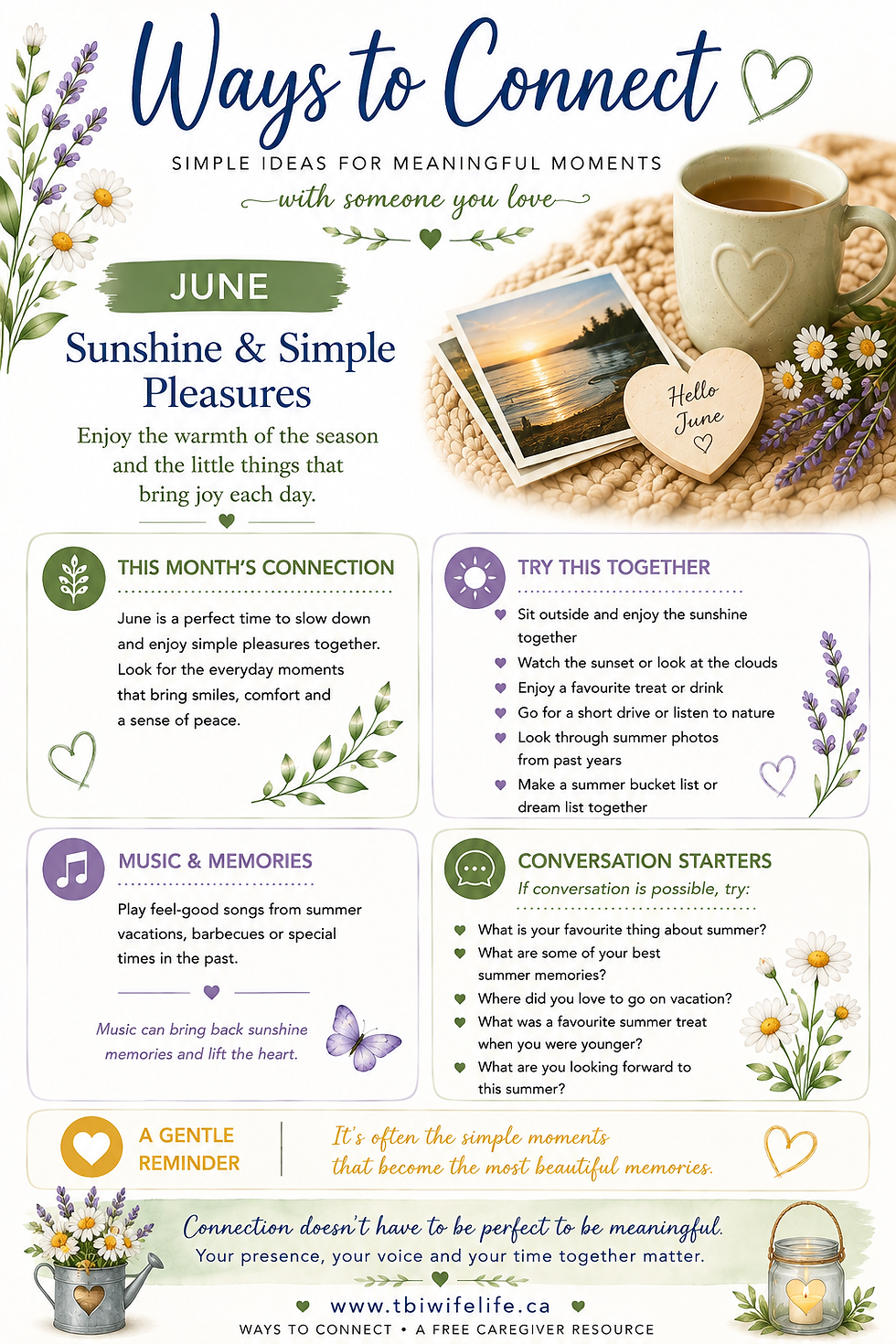
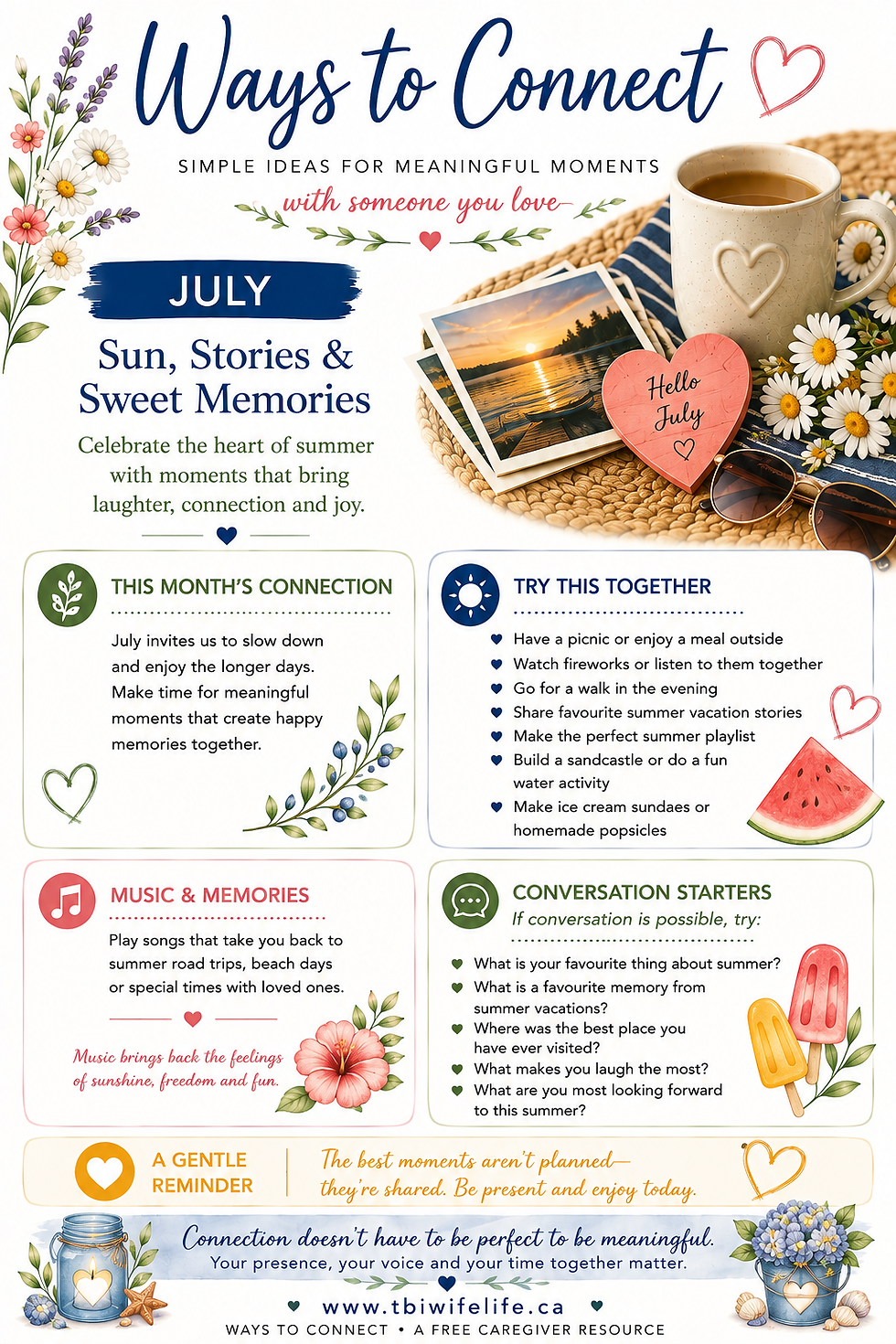
So I started creating simple monthly pages built around seasons, familiar memories, music, photographs, sensory experiences and little things families can do together. They're not about testing someone's memory or expecting a certain response. They're simply there for those moments when you're sitting beside someone you love thinking, What can we do together today?
One of the most important phrases I added to the pages is “If conversation is possible…”
I chose those words deliberately. Not everyone can answer a conversation starter. Someone living with dementia, a brain injury, aphasia or other cognitive or communication changes may not remember the answer. They may understand you but be unable to find the words. And sometimes they may not be able to respond at all.
But difficulty communicating doesn't mean the need for connection has disappeared.
You can play a familiar song. Look through old photographs. Sit outside and feel the sunshine. Bring something connected to a hobby they once loved. Read aloud. Hold their hand. Tell them a family story instead of asking them to tell you one.
And pay attention to the little response, like a smile, tapping fingers, humming, a change in expression or simply becoming calmer.
Those are conversations too. They're just happening in a different language.
Just because our loved ones can no longer communicate in a way we easily understand doesn't mean they no longer need to feel connected. Connection contributes to emotional well-being, stimulation and a sense of belonging. Statistics Canada reported that approximately 1.1 million older Canadians, or 19.2%, experienced loneliness in 2019–2020. While that figure isn't specific to people living in long-term care, it's a reminder of how easily older adults can experience isolation. Statistics Canada — Social isolation and mortality among Canadian seniors
Meet Them Where They Are Today
I think this may be the biggest lesson I've learned.
A meaningful visit doesn't have to look like it did six months ago, five years ago or before everything changed.
Some days you may have a great conversation. Another day you might listen to three songs together. Another day your loved one may sleep while you sit beside them and hold their hand.
None of those visits is less valuable.
The goal isn't to get the "right" response or recreate the person they used to be. It's about finding ways to connect with the person who is in front of you today.
And their story still matters.
They are still mothers, fathers, partners, grandparents, friends and people who have lived entire lives. They had first jobs, favourite songs, friendships, adventures, inside jokes, traditions, heartbreaks, hobbies and stories. Even when they can no longer tell those stories themselves, we can help carry them.
That's what I hope Ways to Connect can do for families.
You don't have to use every suggestion on a page. Pick one. Play one song. Bring one photograph. Ask one question. Sit outside for ten minutes.
And if none of it works that day, that's okay too.
Connection doesn't have to be perfect to be meaningful. Your presence, your voice and your time together still matter.
Free Download
Click here to download the complete 12-month Ways to Connect collection





Comments